Why You’ve Never Called Yourself a Musician — And What It's Cost You
Music is my life. It's my career. I've been making a full time income on strictly music for over five years. So why does someone like me even cringe at the thought of calling myself a musician?
I know it's absurd. But it's real. And I know I'm not alone.
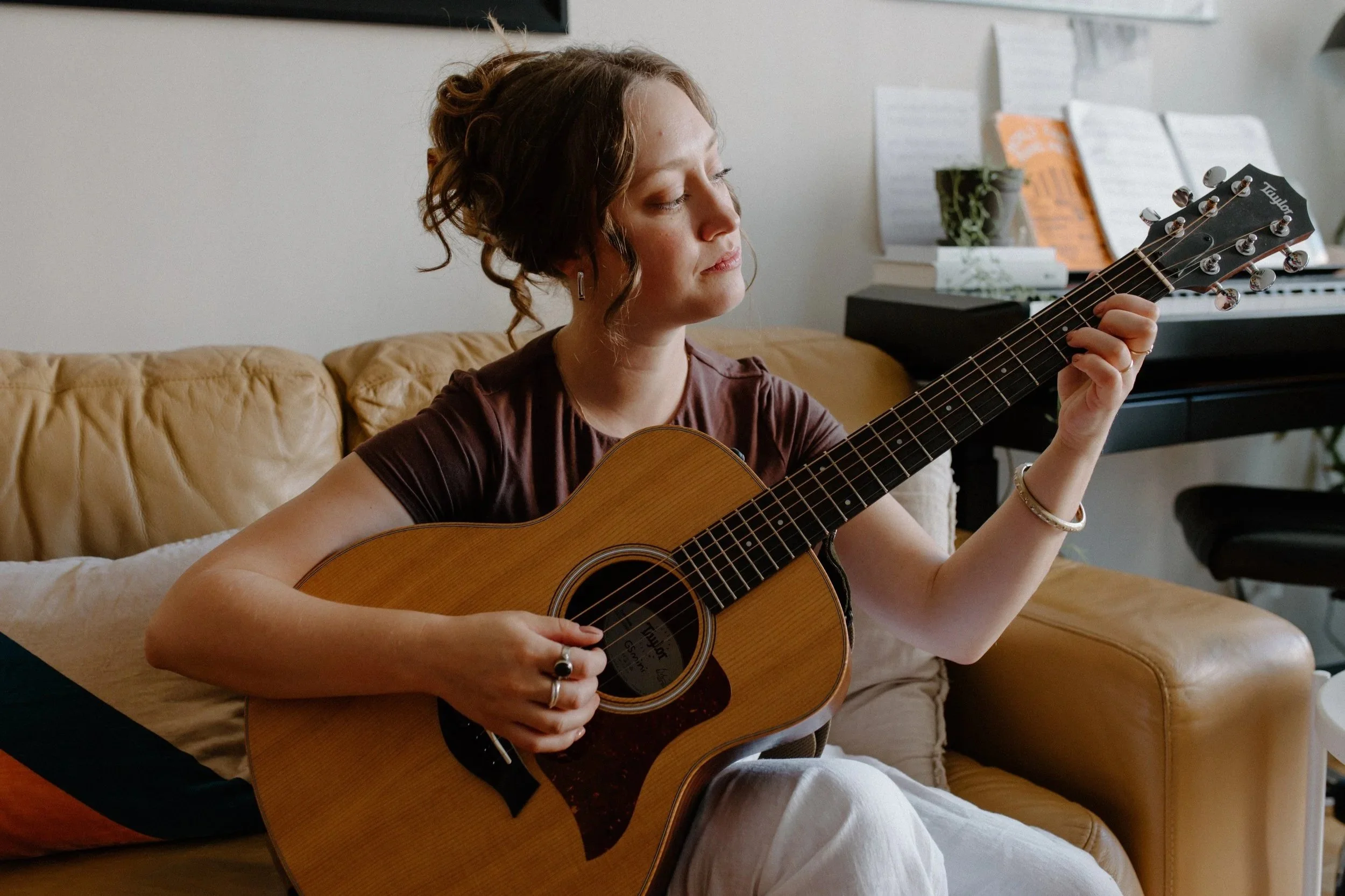
I remember standing in a group of musicians — people I considered more "musician-like" than myself — when the question came around to me. "And are you a musician also?"
I hesitated. I compared. I tensed.
It's like I forgot what the answer was supposed to be.
And I work in music full time.
The measuring stick that keeps moving
When I picture a "musician" I either imagine someone at the very top of the game — the professional concert pianist at the orchestra, or the singer-songwriter playing completely original material to a sold out crowd. Heck, I'd even attribute it to the sidewalk accordion player who was likely self-taught and spends his days hoping for a few bucks.
If he can be a musician, why is it so hard to give that title to myself?
The first thing that comes to mind is all of the ways I am subpar at the instruments I play. I can't really do a convincing guitar solo. I barely play bar chords. I've never completed a 100% original song. Yikes.
And yet — a musician? Well, music is all that person does. It's their way of moving about in the world. It's a part of them.
Wait a minute. I'm describing myself.
So maybe I am a musician — of course I am. But why does claiming that title feel almost embarrassing? Almost naive?
The real explanation
It's the flip side of the Dunning-Kruger effect, where the more you know, the more aware you become of everything you don't. Expertise doesn't build confidence. It builds visibility into your own knowledge gaps.
The person who learned three chords last month will confidently call himself a musician at a dinner party. I play five instruments. I read music like the back of my hand. I studied music at the post-secondary level. And I still cringe at the word.
The standard isn't rising as you improve. It's running away so fast you can’t catch up.
And here's the part nobody says out loud: that standard was never yours to begin with. It was handed to you — by music school culture, by the mythology of the tortured artist, by an industry that gatekeeps identity as fiercely as it does success. You internalized it so long ago, that it started to feel like your own judgment.
It isn't.
What claiming the word actually does
When someone finally lets themselves say it — I'm a musician — something clicks.
Not because anything about their playing changed. Because their relationship to where they are changes. They can enjoy their current level while still recognizing there's endless room to grow. They stop apologizing for their interests. They stop dimming down their accomplishments in rooms where music comes up.
They feel like they belong to something. And they start connecting with their community in a way that was always available to them — they just didn't feel entitled to walk through the door.
The word isn't a finish line. It's a door you were always allowed to walk through.
The label isn't vanity. It's architecture.
Identity is the foundation for the choices you make and how you approach everything that follows. It's why behaviour change is so hard when you try to work from the outside in — you can't sustain actions that contradict who you believe yourself to be.
This concept is well established in personal development. James Clear built an entire framework around it — the idea that lasting change starts with identity, not habit. Be the person who does the thing you are trying to do, and the behaviour follows naturally. It works because the identity does the heavy lifting. You stop forcing and start aligning.
But nobody is talking about this in music.
We talk about practice schedules. We talk about technique. We talk about motivation and consistency and showing up. We never talk about the fact that calling yourself a musician — claiming that identity fully, without caveats — is the single most structural thing you can do for your musical life. It's not a reward you earn at the end. It's the foundation you build from the beginning.
This is what I mean when I talk about architecture for the spirit. Not decoration. Not inspiration. Structure. The kind that supports everything else.
If you connect with music, play an instrument (doesn't matter how well), and music is an important part of your past, your present or your future — this is your invitation to join the musician club. You're one of us. You always will be, if you want to be.
Olivia Apara is a Certified Music Therapist (MTA) with over a decade of clinical practice, helping ambitious women redesign their relationship with music and creative identity. Based in Vancouver. Working everywhere.
