You Are Not a Quitter. That's the Wrong Diagnosis.
There's a story you've been telling yourself for a while now.
It goes something like this: I started, I stopped, I guess I’m just not the kind of person who follows through. Maybe it's the guitar that's been leaning against the wall since 2019. The piano lessons you quit after three months. The choir you loved and left without a real reason — or at least, not one you could explain out loud.
You filed it quietly under "things I tried" (although you barely did). You moved on. You told yourself it wasn't the right time, or you weren't disciplined enough, or you just didn't want it badly enough.
Here's what I actually think is going on: You weren't a quitter. You were misdiagnosed.
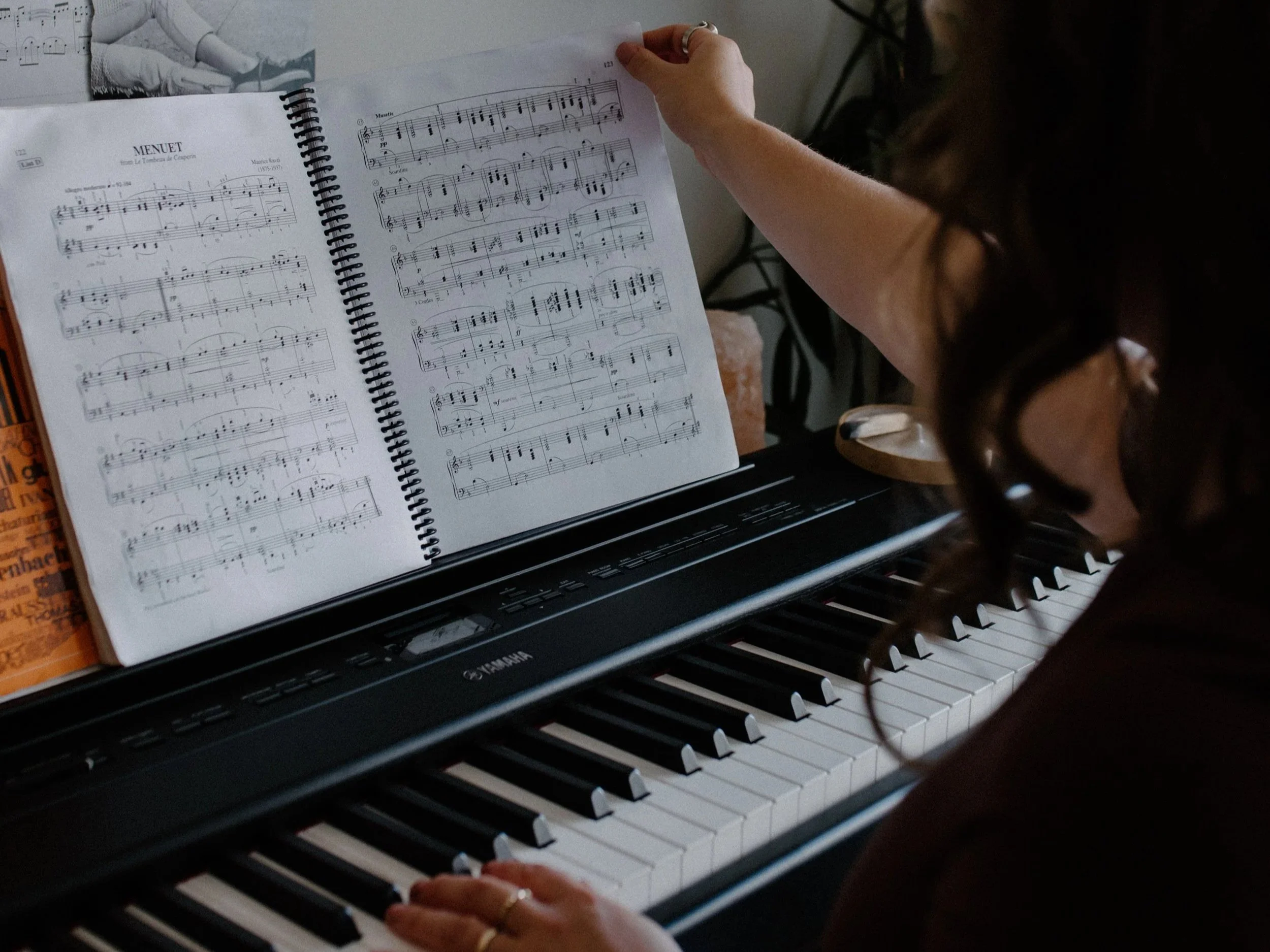
The diagnosis that stuck — and why it was wrong
When we stop something, we almost always reach for the same explanation: lack of willpower. Lack of follow-through. Some character flaw dressed up as a lifestyle pattern.
It's an easy answer. But it's also almost never true.
In over a decade of clinical practice and teaching, I have never once met someone who quit music because they didn't care. Every single person who walked away did so because something in the design of their practice failed them — not that THEY were the failure.
The practice was joyless. The structure was borrowed from someone else's process. The goals were vague, borrowed, or not thought about at all. The environment was wrong. The expectations were built for a version of them that didn't actually exist.
They didn't quit. They ran out of runway on a system that was never built properly for them in the first place.
The real diagnosis
High-performing women don't struggle with music because they lack discipline. They struggle because they walk in already knowing what success is supposed to look like. They've built careers on reading metrics, hitting standards, executing against a blueprint. That skill — self-awareness and measuring performance — is exactly what makes them exceptional at everything else. And it's what can make music feel impossible.
Music isn't a test you can study for. Well — it can be. But that's not where the good stuff lives.
In my clinical work as a music therapist, I've sat with people who had no choice but to redefine success entirely — individuals with disabilities, complex challenges, profound limitations. Sometimes the performance standard was simply: touch the instrument. Play one note. And in those moments I watched something that seemed so small, feel like such a win.
The women who come to me haven't lost their ability to perform. They've just imported the wrong performance standard — and nobody ever told an ambitious woman she was allowed to change that.
What a misdiagnosis costs you
When you accept the wrong diagnosis, you stop asking better questions.
Instead of asking what wasn't working about how I was doing this — you decide that I am someone who doesn't finish things.
That identity — "not a finisher," "not a musician," "not really a creative person" — quietly becomes baggage you end up carrying around. You build your interests and pursuits around it. You stop starting things because you already know how they end.
The cruelest part? The misdiagnosis comes with evidence. You did stop. You didn't go back. So it must be true?
Stopping and quitting are not the same thing. Stopping is a response to a broken system. Quitting is a judgement of character. We've been treating one like the other for a long time — and it's costing people things they genuinely loved.
What this looks like in practice
A few years ago a woman reached out to me — driven, capable, the kind of person who figures things out. She wanted to return to piano. She had the basics down but no real direction, maybe a Christmas song for the holidays. Simple enough.
What unfolded over our lessons was a pattern I've come to recognize immediately. She berated herself at every lesson for not having practiced enough. She chose songs that were technically difficult — a challenge, which is what she knew how to respond to. Progress felt slow. The lessons became sporadic. Eventually she stopped altogether, convinced she couldn't "practice enough to make it worth it."
I tried to tell her we could just enjoy the lesson time — the joy of playing, rather than reviewing targets and measuring output. But the expectations were already set. She couldn't drop them.
She didn't quit. She didn't quit. She misdiagnosed herself — and nobody corrected it.
I wish I had known then what I know now about practice design — because what she needed wasn't more discipline. She needed someone to tell her the measuring stick she brought into the room was okay to leave at the door.
Here's what I would do differently now.
I would have chosen songs she almost felt were too easy — but with one challenging component, not multiple. One song, one stretch, everything else already within reach. Something she could realistically learn in that following week. And it would have to mean something to her. Not a technically appropriate piece from a curriculum. A song she actually loved — because music you care about sounds better even when you play it imperfectly.
The lesson itself would shift from reviewing what she didn't do, to refining what she already had. I'd record her at the start and end so she could hear her own progress in real time. And I'd have her rate the difficulty of each element herself — just a number. How hard does this feel right now? That one tool changes everything. She stops measuring herself against an invisible standard. And I adjust as we go to stay in the right zone.
This is what the psychologist Mihaly Csikszentmihalyi spent decades studying — the conditions that produce flow state. The mechanism is simple: challenge must sit just slightly ahead of current skill. Too far ahead and you get anxiety and avoidance. In the sweet spot you get momentum, enjoyment, and the thing every lapsed musician is truly missing — the genuine motivation to keep playing after the lesson ends.
She wasn't unmotivated. She was overmatched by her own design.
What happens when you get the right diagnosis
You stop starting over. You start building forward.
You stop white-knuckling your way through someone else's structure and start designing something that actually fits — your personality, your nervous system, your schedule, your why.
You pick up the thing you put down. Not because you finally found the willpower (you were never missing it). Because you stopped blaming yourself for a system failure and started building something worth returning to. Something that feels good over and over again.
That guitar against the wall collecting dust isn't evidence of who you are or aren't. It's evidence of a practice that wasn't designed for you yet.
You don't need more discipline. It was a design flaw the whole time. Not a character one.
A note on why this is never just about music
I talk about music because it's where I do my most precise work — it's also where the misdiagnosis tends to hit the hardest, because music is so tied to identity in a way that, say, a gym habit isn't. (Nobody has a complicated relationship with their abandoned foam roller. The guitar is a different story.)
But I've watched this exact pattern play out in writing, painting, movement, language learning, cooking. The instrument changes. The misdiagnosis is always the same.
You were not broken. The system was.
Olivia Apara is a Certified Music Therapist (MTA) with over a decade of clinical practice, helping ambitious women redesign their relationship with music and creative identity. Based in Vancouver. Working everywhere.
